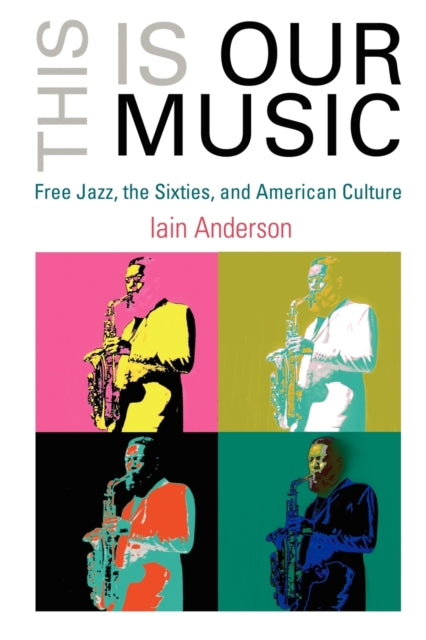

This Is Our Music : Free Jazz, the Sixties, and American Culture
This Is Our Music : Free Jazz, the Sixties, and American Culture
Iain Anderson
Paperback
Out of stock
- FREE SHIPPING ON ORDERS OVER £15
Couldn't load pickup availability
Iain Anderson's This Is Our Music, echoing the title of Ornette Coleman's 1960 album, delves into the complex question of ownership and value within jazz during a transformative era. Anderson explores how, throughout the 1950s and 1960s, musicians, critics, fans, politicians, and entrepreneurs variously asserted jazz as a national art form, an Afrocentric expression, an extension of modernist innovation, a music of mass consciousness, and the domain of a cultural elite.
This original and thought-provoking book examines the processes by which decisions are made regarding the value of a cultural form, and the criteria upon which these judgements are based, using the impact of 1960s free improvisation on the evolving status of jazz as its central case study. By scrutinising the creation, presentation, and reception of experimental music by Ornette Coleman, Cecil Taylor, John Coltrane, and their contemporaries, Anderson traces the often strange, unexpected, and at times deeply ironic intersections between free jazz, avant-garde artistic movements, the political landscape of the Sixties, and the networks of patronage that sustained it.
Anderson highlights the profound impact of free improvisation on the institutional standing of jazz, despite persistent resistance from some of its most prominent beneficiaries. He concludes that the efforts of African American artists and intellectuals to define their place within American society, structural shifts within the music industry, and the growth of non-profit sponsorship all foreshadowed a significant reshaping of established cultural norms.
Simultaneously, the increasing prestige of free improvisation relied, in part, on traditional highbrow criteria: the development of increasingly esoteric styles, shifts in performance venues and audience behaviour, European endorsement, a move away from mainstream commercialism, and the professionalisation of critical discourse. Thus, Anderson argues, jazz musicians and their advocates – and potentially those within other artistic fields – have both challenged and adapted themselves to an ongoing process of cultural stratification.
Publisher: University of Pennsylvania Press
ISBN: 9780812220032 Binding: Paperback
Date: 5/6/2007 Pagination: 264 pages
Share